
Monthly Wildebeest Migration Patterns
The seasonal Great Wildebeest Migration Patterns throughout the year
Monthly Wildebeest Migration Patterns : Also called the Great Wildebeest Migration and the Serengeti Wildebeest Migration, the Great Wildebeest Migration is one of the most exciting natural wonders of the world.
With 2 million wildebeess accompanied by thousands of gazelles and zebras, Wildebeest Migration is the largest migration of wildlife ever witnessed on earth.
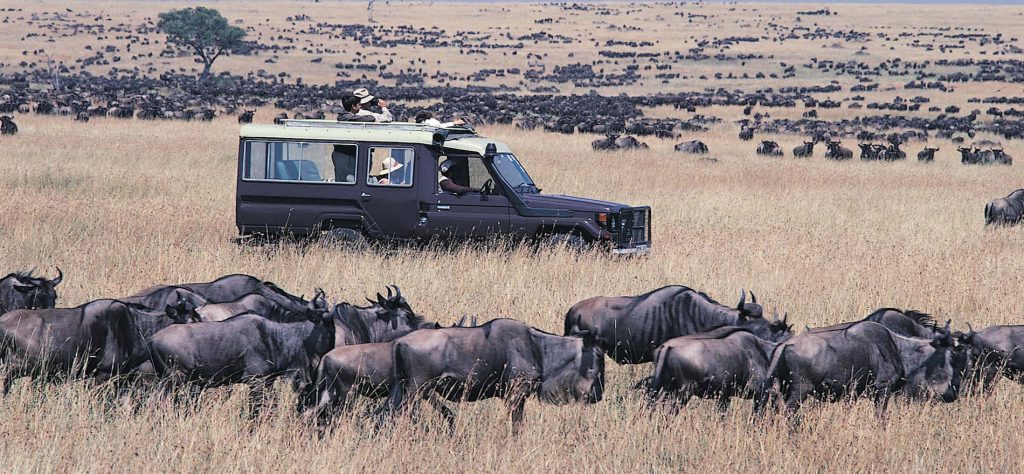
Witnessing the Great Wildebeest Migration is a once in a lifetime opportunity offers novice travelers a unique opportunity to enjoy this grand spectacle up close and in person on Wildebeest Migration safari in Kenya and Tanzania.
In this blog, we have shared vital information on the monthly Serengeti Wildebeest Migration Patterns to discover what the Wildebeest Migration is and when is the best time to travel.
What is the Great Wildebeest Migration?
The Great Wildebeest Migration is the largest mammal migration in the world and one of the “Seven Natural Wonders of Africa”. It is a true spectacle of nature, with millions of wildebeests, zebras and gazelles thundering across the endless plains of the Serengeti throughout the year in search of fresh grazing and high-quality water.
For many travelers, the epic crossing of the Grumeti and Mara Rivers is the ultimate highlight of the Wildebeest Migration.
For many novice travelers, witnessing the Great Wildebeest Migration is an ultimate goal. Depending on the time of the year, there are ideal locations in Serengeti National Park and Masai Mara National Reserve to experience and witness this once-in-a-lifetime experience.
In this blog, we detail montly Great Wildebeest Migration Patterns, what to expect on a wildebeest safari holiday and the best places to stay to make the most of your Wildebeest Migration Safari.
Month by Month Wildebeest Migration Patterns
The Great Wildebeest Migration is a year – round occurance dictated by the rains which see the herds moving in a constant clockwise motion throughout the Serengeti National Park and Masai Mara National Reserve.
From December to April, the wildebeest herds can typically be found in the Ndutu Plains in the Southern Serengeti and in late January – early February – the calving season takes place.
Once the long rains arrive in April – May, the herds move towards the Serengeti’s Western Corridor, then the wildebeest face perilious water currents and predators as they attempt to across the Grumeti River to continue their hourney north towards the lush pastures of the Masai Mara National Reserve.
Finally, the herds reaches their destination ad they remain in the Masai Mara National Reserve for around three months before heading back to Tanzania in November.
January, February & March Migration Patterns
The gnus – wildebeests, zebras and gazelles spend the first month of the year in the plains of Serengeti National Park feeding on the short grass and preparing for migration.
The majority of wildebeest have just given birth to their calves in February with around half a million new calves born, as the Southern plains become packed over, the herds begin to spread west and prepare for their migration north in the Spring.
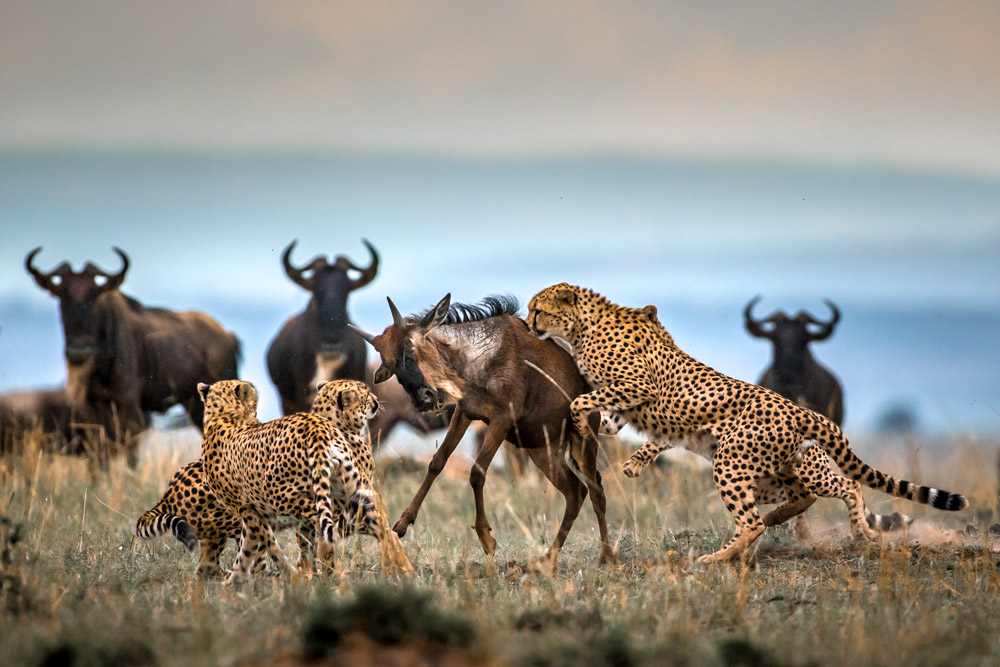
The presence of the vulnerable caves makes for an incredible sight during game drives, expect to see newborn calves and if you are luck, you mught witness a birth and also see plenty of predator action.
The wildebeest courange their newborns to get on their feet immediately and join the herds where their safety is guaranted. Predators like lions, leopards, spotted hyenas, and rare wild dogs wait in the surrounding areas ready to prey on the weak and vulnerable members of the herd. An easy kill isn’t awlays guaranteed as the female wildebeest insitinctively head to the short grass plains so that they can see predators approaching and they form a barricade around birthing mothers to protect them and their young ones. Thus ensuring the majority of the newborn calves survive.
Towards the end of the short dry season (usually the end of March), the short – grass plains in the Southern Serengeti begin to dry out and the wildebeest and zebras start to head towards the western woodlands.
April & May Migration Patterns
April usually brings the first signs of migration, with hundreds of thousands of wildebeests beginning their arduous journey across the western plains and finally north.
The herds move through the Ndoha and Dutwa plains adjacent to the Mbalagweti River, they may begin to pile up near the Mbalagweti and Grumeti Rivers awaiting the crossing – a dangerous obstacle for animals.
June, July & August Migration Patterns
The rutting season usually starts in June and you expect to see fierce fighting between competitive males as they vie for the attention of females.
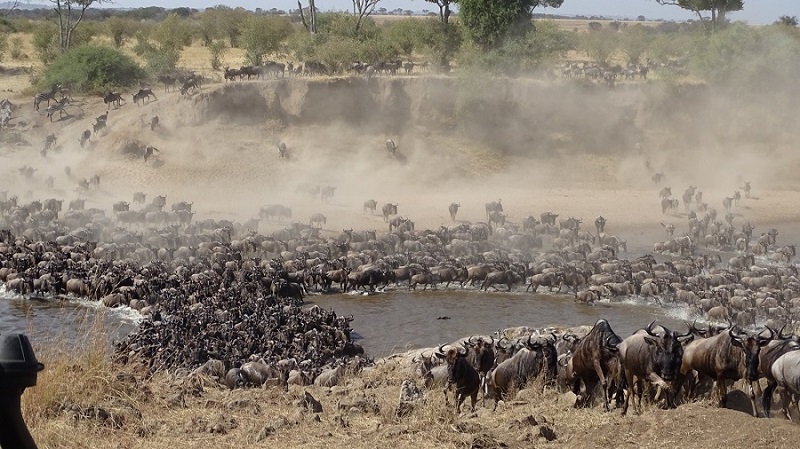
By July, the herds head north towards the fresh grass of Masai Mara National Reserve, to get there they must face one of the greatest obstacles of their journey – crossing the Grumeti River and Mara River.
The dramatic river crossings is one fo the most exciting events of the Great Wildebeest Migration usually start in July but the precise timing depends on the rains. The wildebeests and zebras grow into a mega herd before attempting to cross the Grumeti River, to continue to their journey north, with treacherous water currents and Nile crocodiles urking in the muddy waters and lions, cheetahs, leopards and hyenas waiting on the river banks, only the strongest individuals survive.
September & October Migration Patterns
The migration moves to the Masai Mara in search for fresh grazz to graze, this is the perfect time to go on a Masai Mara safari. The long rains begin in October, and the herds begin their long journey south back to the Serengeti following the new grass.
This does not mean that life becomes easy, always there is danger lurking around in form of hunting pride of lions and packs of hyenas.
November & December Migration Patterns
By the end of October or early November, the short rains start in Tanzania attracting the wildebeests and zebras back to the plains of the Southern Serengeti which are green and lush once again.
The herds arrive back in the Serengeti National Park for the rainy season, the wildebeests may begin to give birth and prepare to complete the cycle over again next year.
Start planning your Wildebeest Migration Safari Today. Get in Touch with our experts for a tailored package.