
Masai Mara Wildebeest Migration
Masai Mara Wildebeest Migration : Embark on an unforgettable journey to witness the Great Wildebeest Migration in Kenya’s renowned Masai Mara National Reserve.
Between July and October, witness the awe-inspiring Masai Mara Wildebeest Migration with over 1.5 million wildebeests, alongside vast herds of zebras and gazelles, journey from Tanzania’s Serengeti to Kenya’s Masai Mara.
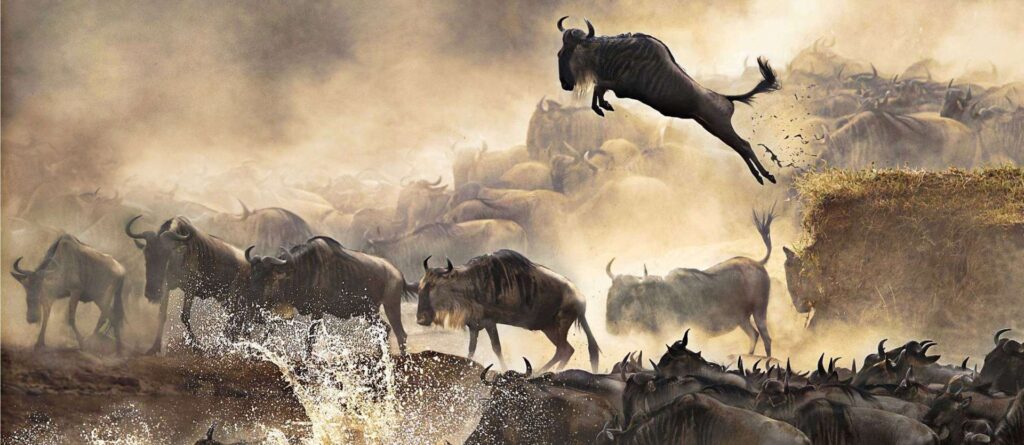
The Great Wildebeest Migration is one of the world’s most dramatic natural spectacles.
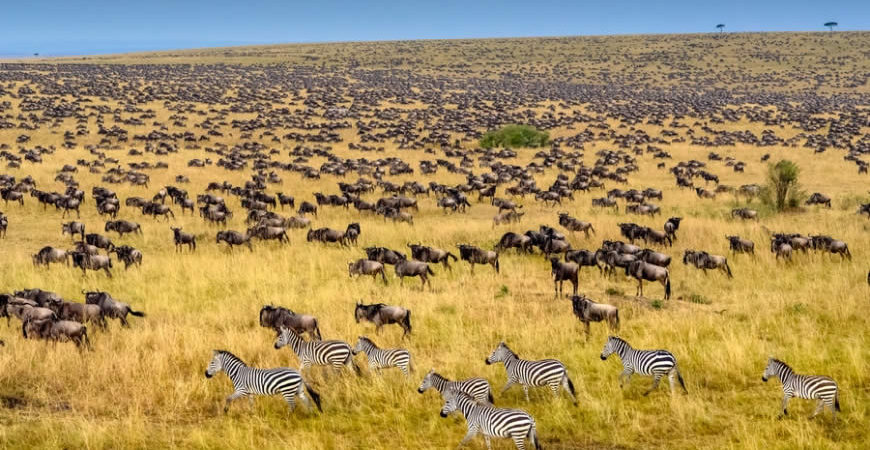
Across the open savannah plains, endless columns of wildlife stretch to the horizon. They come to birth their young in the lush grassland – echoing with the calls of newborns and attract predators like cheetah, lion, leopard, and hyenas. In the sky, vultures and eagles circle, sensing the feast below.
What is the Great Wildebeest Migration?
Often referred to as the “Greatest Wildlife Show on Earth, the Great Wildebeest Migration is one of the most spectacular natural events on Earth. Every year, over 1.5 million wildebeests, accompanied by hundreds of thousands of zebras, gazelles, and other herbivores, embark on a circular journey across the Serengeti in Tanzania and the Masai Mara in Kenya.
This annual migration is driven by the search for fresh grazing and water, making it a continual movement dictated by the rains.
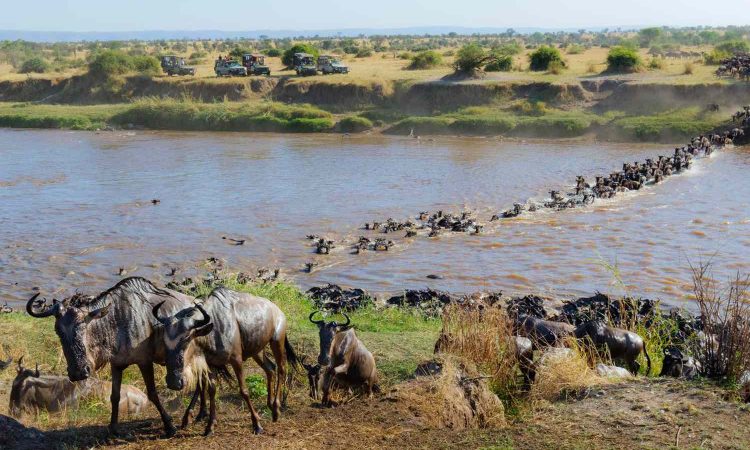
The migration involves dramatic river crossings, particularly at the Mara River, where wildebeest plunge into crocodile – infested waters, closely by predators such as lions, hyenas and cheetahs. This thrilling and often perilous journey is a must see for anyone seeking for a true Africa Safari Experience in Masai Mara National Reserve.
Why the Masai Mara Is the Best Place to See the Wildebeest Migration
The Masai Mara National Reserve in Kenya is widely regards as the best place to witness the Great Wildebeest Migration, thanks to its unparalleled density of wildlife, open savannah landscapes, and iconic river crossings. One of the most dramatic highlights of the migration is the Mara River Crossing, where thousands of animals brave strong currents and lurking crocodiles.
Game drives in Masai Mara National Reserve during this time offer front-row seats to this heart-stopping spectacle, along with frequent sightings of predators like leopards, cheetahs, lions and hyenas in action.
When to visit Kenya for Wildebeest Migration
The best time to witness the Wildebeest Migration in Masai Mara is typically from July to October, when herds cross into the Mara from the Serengeti in Tanzania. This is the peak of the Great Migration Safari Season, offering a front-row seat to some of the most thrilling wildlife encounters on Earth.
July to August: The Arrival and First Crossings
The migration begins to arrive in Masai Mara National Reserve in July and by August, thousands of wildebeests gather on the banks of the Mara River, staging for the most river crossings, intense and chaotic events where herds plunge into the crocodile – infested waters.
This period is ideal for witnessing high stakes drama and predator action on daily game drives in Masai Mara.
September to October: Grazing and Predator Encounters
By September, the herds spread out across the Mara’s lush grasslands. Wildlife viewing is exception, with predators closely trailing the herds. Game drives in Masai Mara during this time offer excellent opportunities for photography and immersive wildlife experiences.
While nature is never entirely predictable, planning your Kenya safari migration adventure between July and October gives you the best chance to witness this awe-inspiring natural event.
Frequently Asked Questions about The Great Wildebeest Migration?
Can The Migration River Crossings Be Predicted
No, the Migration River Crossings cannot be predicted. Not even wildebeests themselves know when they are going to cross. Some arrive at the water and swim over immediately, some arrive and spend days hanging around grazing, whilst some arrive and turn back to where they came from.
We wish we can predict the crossings, but no-one can. This is why it is best to have as much time on safari as possible if you hope to see the Mara River Crossing.
Why Do Wildebeests Migration?
Generally, it is believed that the Great Migration in Africa is dedicated primarily by the wildebeest’s response to the weather. They move after the rains and the growth of new grass, essential following a natural instinct to find food to stay alive.
Some experts believe that the wildebeest are triggered by distant lightning and thunderstorms, but there scientific proof of it.
What Time of the Year Do The Wildebeest Migrate?
Most people think the wildebeest migration only takes place between July to October, but it is actually an ever – moving, circular migration with various but equally exciting events that occur year-round. The popular river crossings that is Grumeti and Mara River Crossings usually coincide with safari’s high season (June to October), hence the perception that this is the only time of the year that the wildebeest are on the move and can be seen.